- Florida Keys Road Trip
- Posts
- The day Key West declared war on America...
The day Key West declared war on America...
...and lost on purpose.

Florida Keys Road Trip
April 14, 2026
Welcome back to the Florida Keys Road Trip Newsletter. If you are reading this from somewhere that still requires a jacket, we have good news: the water is warming up, the winter winds are finally laying down, and the spring bird migration has officially arrived in the islands.
This week, we are looking at a 1982 traffic jam that accidentally created a micronation, a ghost island built by shipwreck salvagers, and why you might want to rethink what goes into your beach bag before you cross the 18-Mile Stretch. Let's get into it.
Was this forwarded to you? Sign up here to get on Keys Time every week — it's free!
❓ Keys Trivia
What tiny island at the end of the road was the wealthiest city per capita in the entire United States during the 1830s?
Answer at the bottom of the newsletter.
📣 The Mile Marker Roundup
🌀 Hurricane Hunters Land in Marathon: As part of the Caribbean Hurricane Awareness Tour, NOAA and the U.S. Air Force Reserve are bringing a massive WC-130J "Hurricane Hunter" aircraft to Florida Keys Marathon International Airport on Tuesday, April 14. The public is invited to tour the aircraft and meet National Hurricane Center experts from 1:00 p.m. to 4:00 p.m. — free admission. Read more →
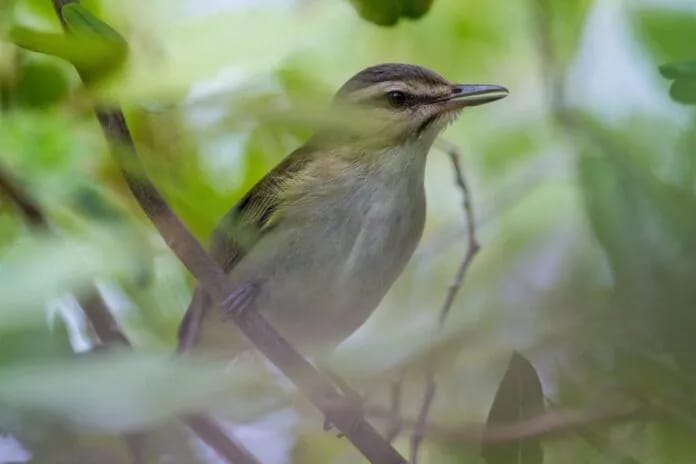
🐦 Spring Bird Migration Hits the Keys: The annual spring migration is arriving slightly ahead of the traditional April 15 start date. Local birders have already spotted peregrine falcons, ovenbirds, and prairie warblers. The definitive sign of spring? The arrival of the black-whiskered vireo at Fort Zachary Taylor — a Caribbean species that abandons the continent every fall and returns to South Florida to breed. Read more →
🌉 Duck Key Bridge Enters a National Beauty Contest: Monroe County has officially entered its newly completed Harbour Drive Bridge on Duck Key into the National Association of County Engineers' "Bridge as a Fashion Model" contest. Public voting is open through April 14 — the county is asking locals to help the Keys take home the national title. Vote now →
🤿 Vintage Dive Day Brings History to Life: The History of Diving Museum hosted Vintage Dive Day at MarineLab Undersea Park in Key Largo this past weekend. Certified divers had the rare opportunity to test out traditional double-hose regulators, while experts demonstrated the classic U.S. Navy Mark V helmet and a 1915 Miller-Dunn "Divinhood" — the exact equipment used by early marine biologists and treasure hunters to explore the Florida Reef. Read more →
🎣 The Yellowtail Snapper Spawn Is On: The annual yellowtail snapper spawn is in full swing, with aggressive bites reported across Molasses, Conch, and Davis Reefs. Offshore, mutton snapper are showing up on the deep wrecks in 120 to 180 feet of water, while early-season cobia are already being spotted cruising the shallow flats and channel markers. Read more →
🌴 Partner Spotlight
You Are Not Packing for Myrtle Beach
First-time visitors to the Florida Keys often pack for a generic beach vacation, only to arrive and realize the environment here plays by its own rules. The sun is more intense, the coral reefs require specific protection, and the biting insects — specifically the invisible "no-see-ums" — laugh at standard bug spray.
Before you zip your suitcase, make sure you have the actual essentials: reef-safe mineral sunscreen (chemical sunscreens are banned in Key West and actively damage the reef), a Picaridin-based insect repellent instead of DEET, a waterproof pouch for your phone during sudden afternoon squalls, and polarized sunglasses to help you spot sea turtles and rip currents.
🧩 Deep Dive

The Conch Republic: The Day Key West Declared War on America (and Lost on Purpose)
If you spend enough time in Key West, you will inevitably see the blue flag of the Conch Republic flying proudly alongside the Stars and Stripes. It features a conch shell, a blazing sun, and the motto: "We seceded where others failed."
It sounds like a quirky marketing gimmick, but the Conch Republic was born out of genuine economic desperation.
In March 1982, the U.S. Border Patrol set up a roadblock at the Last Chance Saloon in Florida City — the only road in or out of the Florida Keys. Agents stopped every single car leaving the islands, searching trunks and glove compartments for illegal drugs and undocumented immigrants. The result was an immediate 17-mile traffic jam on the Overseas Highway.
As news of the blockade spread, tourists began canceling their reservations en masse. The Keys' budding tourism industry was suffocating. Mayor Dennis Wardlow filed an injunction in federal court in Miami to stop the blockade, arguing that the government was treating the Keys like a foreign country. The court refused to intervene.
When reporters asked Wardlow what he planned to do next, he replied: "We are going to go home and secede."
On April 23, 1982, the Conch Republic flag was raised over Key West City Hall. The Schooner Western Union sailed into the harbor and officially attacked the U.S. Coast Guard Cutter Diligence with water balloons, conch fritters, and stale Cuban bread. The Coast Guard played along, fighting back with fire hoses in what became known as the Great Battle of the Conch Republic.
After exactly one minute of "war," Prime Minister Wardlow formally surrendered to a naval officer and immediately demanded $1 billion in foreign aid to rebuild his war-torn nation. (The Conch Republic is still waiting on the check.)
The stunt generated massive international headlines, deeply embarrassing the federal government. The roadblock was quietly removed shortly after.
Today, the micronation lives on as a "sovereign state of mind." If you are in town between April 17 and April 26, 2026, you can witness the 44th Annual Conch Republic Independence Celebration, featuring bed races, parades, and a full reenactment of the Great Sea Battle.
🕰️ Lore & Legends

Indian Key: The Ghost Island of the Wreck Masters
Just offshore from Islamorada lies an 11-acre island accessible only by boat or kayak. Today, Indian Key Historic State Park is a quiet, uninhabited stretch of tropical hardwood hammock. But in the 1830s, it was the most prosperous settlement in the Florida Keys — and the county seat of Dade County.
The island was the empire of Jacob Housman, a notorious "wrecker." In the 19th century, wrecking was the highly lucrative, entirely legal business of salvaging cargo from ships that ran aground on the treacherous Florida Reef. The first wrecker to reach a stranded ship was named the "wreck master" and controlled the salvage operation, often earning 25 percent of the cargo's value in federal court.
Housman built a thriving town on Indian Key, complete with a hotel, a store, streets, and a massive warehouse topped with a three-story cupola used to spot doomed ships on the reef.
The empire collapsed at dawn on August 7, 1840. During the Second Seminole War, a band of 60 to 130 Seminole warriors attacked the island, burning the settlement to the ground. Thirteen residents were killed, including Dr. Henry Perrine, a noted botanist who sacrificed himself while his family hid safely under the floorboards of their home.
Today, you can paddle out to Indian Key, pay the $2.50 admission fee at the honor box, and walk the original 1830s street grid through the ruins of Housman's lost empire. Plan your visit →
✅ Trivia Answer
Key West.
Thanks to the booming wrecking industry — the legal salvage of ships that crashed on the Florida Reef — Key West became the richest city per capita in America by the mid-19th century. At its peak, the salvage business brought more than $1 million a year into the tiny island economy.
Keep your windows down and your watch off.
— The Florida Keys Road Trip Team
Here’s an un-boring way to invest that billionaires have quietly leveraged for decades

If you have enough money that you think about buckets for your capital…
Ever invest in something you know will have low returns—just for the sake of diversifying?
CDs… Bonds… REITs… :(
Sure, these “boring” investments have some merits. But you probably overlooked one historically exclusive asset class:
It’s been famously leveraged by billionaires like Bezos and Gates, but just never been widely accessible until now.
It’s had attractive growth and hasn’t tended to move in line with other markets from 1995 to 2025.
It’s not private equity or real estate. Surprisingly, it’s postwar and contemporary art.
And since 2019, over 70,000 people have started investing in SHARES of artworks featuring legends like Banksy, Basquiat, and Picasso through a platform called Masterworks.
28 exits to date
$1,275,000,000+ invested
Annualized net returns like 14.6%, 17.8%, and 17.8%
My subscribers can SKIP their waitlist and invest in blue-chip art.
*Past performance is not indicative of future returns. Important Reg A disclosures: masterworks.com/cd